W3C and HTML and CSS
World Wide Web Consortium (W3C)
The World Wide Web Consortium (W3C) is an organization that manages the standards and practices used on the World Wide Web. W3C was founded by Tim Berners-Lee in 1994 and has been the main World Wide Web standards organization ever since. Tim Berners-Lee is the creator of the World Wide Web. His footprint on the Internet can only be match by some, like Vint Cerf and Bob Kahn. While Berners-Lee came after Cerf and Kahn, he made a tremendous impact on the way we use the Internet today. Berners-Lee also expanded the Internet usage worldwide with his aptly named invention (World Wide Web).
This is the W3C logo.
Some examples of what W3C does include:
- Establish new World Wide Web standards
- Spread knowledge of the World Wide Web
- Expand usage of the World Wide Web
- Help transnational web organizations come together to decide on issues
We need and use the W3C for the foreground of the World Wide Web. They establish standards, which everyone in the world uses. They are an extremely important organization that has had a tremendous impact on the Internet and the world. With the help of their founder Tim Berners-Lee and their current CEO Jeffrey Jaffe, the W3C has and still is continuing to make an everlasting impact on the Internet and the world as a whole. Without this organization, the Internet and web usage would only be more complicated. This is because W3C helps to mitigate any discrepancies in standards across the globe, which makes the World Wide Web eligible to be accessed from anywhere that has an Internet connection.
Hypertext Markup Language (HTML)
Hypertext Markup Language (HTML) is used to build, and format websites located on the Internet. Files using this language are stored in web servers, and, when the user is requesting to visit a page on the site, the server will send the HTML code for that page to the user’s computer using HTTPS (discussed in HTTP and HTTPS). With that being said, HTML is the backbone of the World Wide Web. It is what makes webpages look the way they do. Meaning that webpages gain the ability to use hyperlinks, pictures, bolded characters, etc.
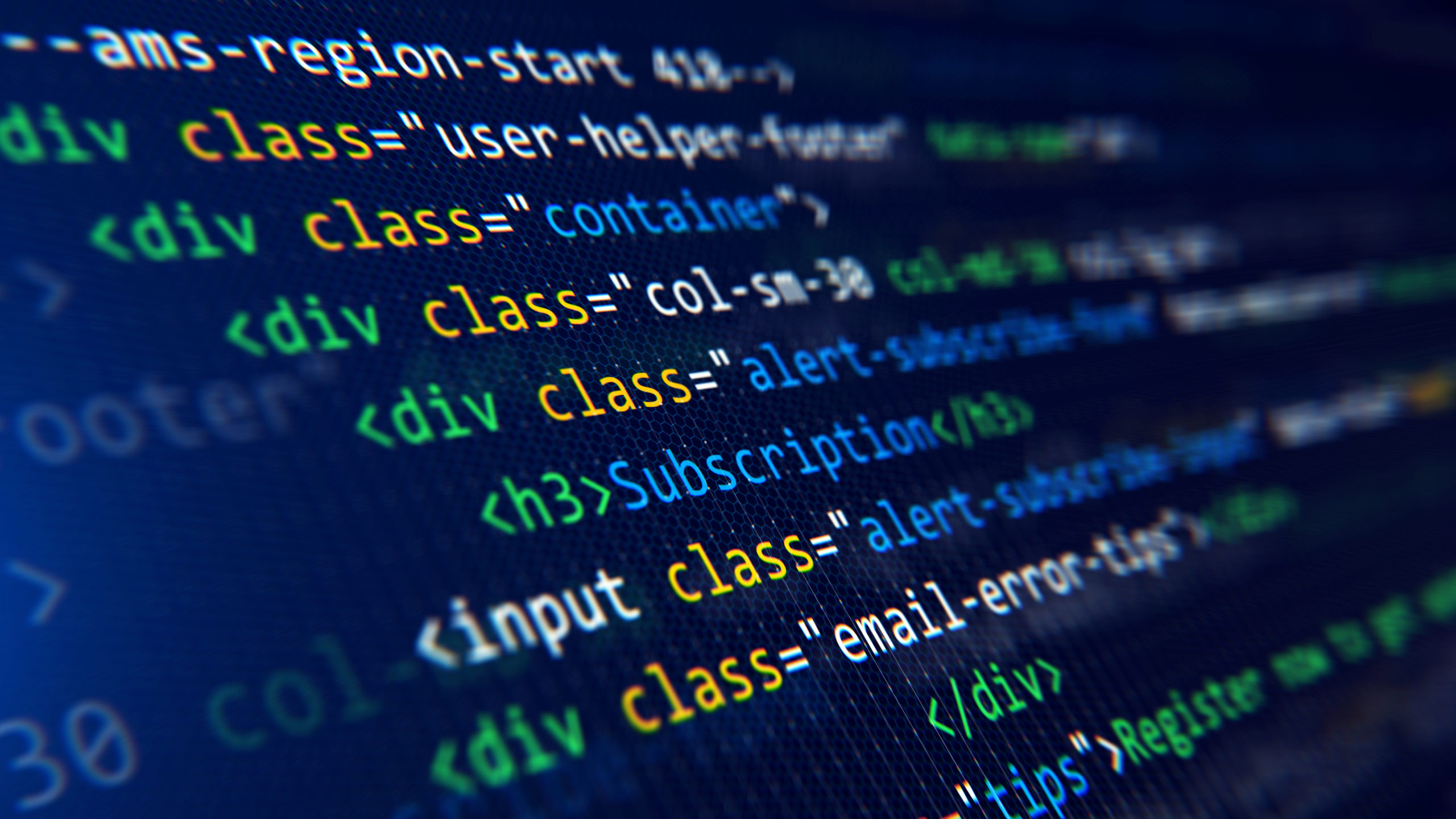
This image shows some HTML code with some different "divs".
Some examples of how to use HTML include:
- Adding a link to a separate source on the bottom of a page (Like the links at the bottom of this page!)
- Adding an image to a web page (Like the one above!)
- Bolding characters on a webpage (Like this!)
- Italicizing text on a webpage (Like this!)
- Adding a link to another webpage (Like the HTTP and HTTPS link above!)
We use HTML in order to keep webpages organized and easy to read. Without HTML, webpages would not look as clean and simple as they do now. Recently, HTML has taken a hit from other programming languages that have developed front-end development capabilities, but HTML will always be the “go to” for many developers. While it can seem hard to learn at first, once you gain a grasp on this language, website design becomes endless. Finally, Cascading Style Sheets (CSS) give aid to HTML in the styling department, and I will talk about CSS in just a bit!
Cascading Style Sheets (CSS)
Cascading Style Sheets (CSS) is a tool used for adding style to webpage documents. Style can come in the form of fonts, spacing, color, resizing existing classes/components, etc. CSS is a fundamental part of web design and makes the web look pretty!
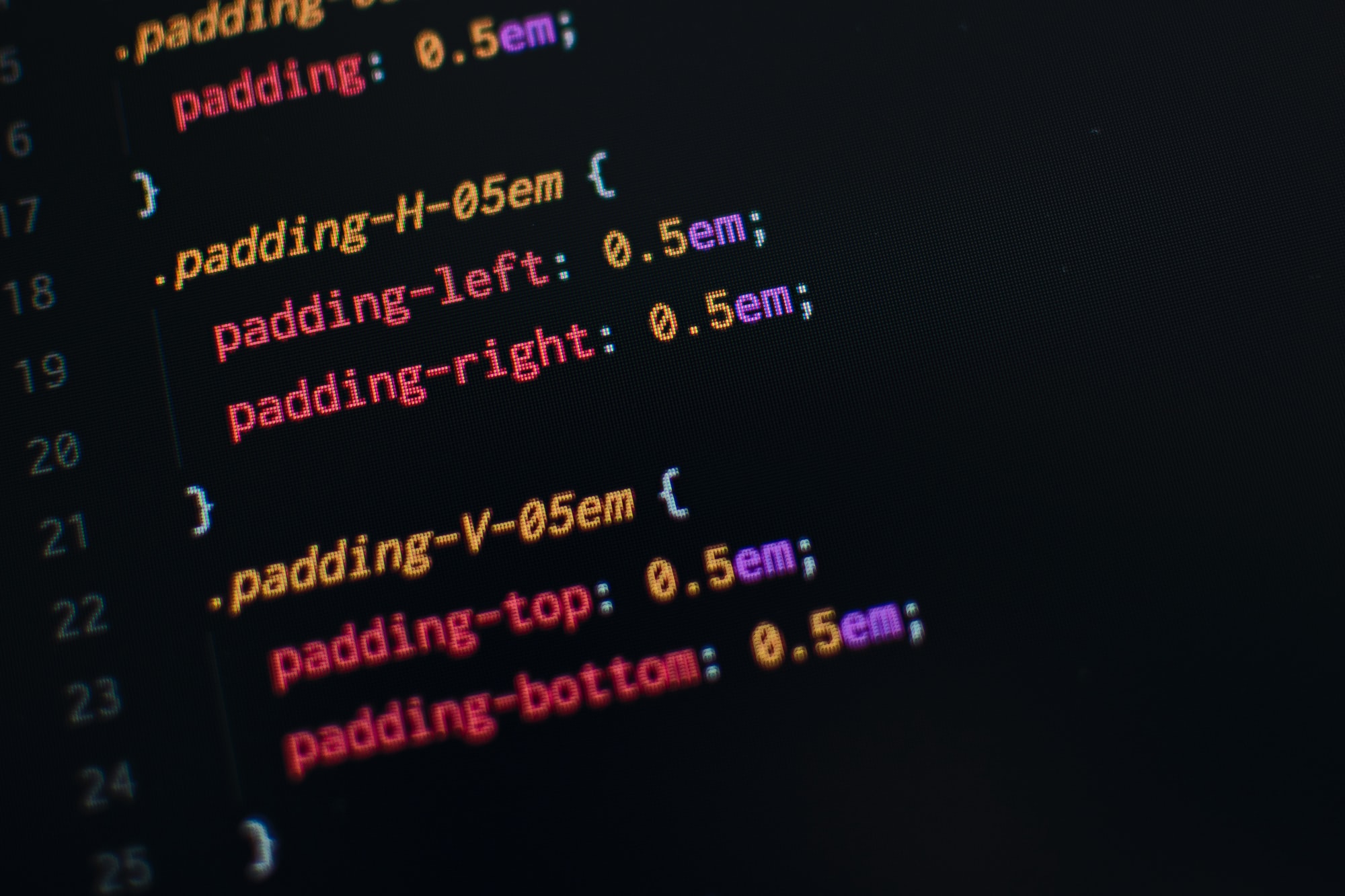
This image shows some CSS code adjusting the padding for certain elements.
Some examples of how we use CSS include:
- Building this website
- Creating image cards (Like the one above!)
- Changing image sizing
- Changing font color
- Changing font style
- Changing header sizing
- This list could go on forever!
CSS is a very important tool for web developers because it allows them to make a website their own using a unique. It is very compatible with languages like HTML and JavaScript but has its own style and use. Almost every website you see when browsing the web uses CSS, unless it was designed on a REALLY low budget or by a beginner. CSS is here to stay for the future, so if you want to learn web design, you are going to have to learn some CSS. Without CSS, you would not be seeing this website the way it looks currently. I used Bootstrap CSS to help me with this website. Bootstrap is a very useful tool that imports all of the CSS styling sheets and JavaScript needed to use different Bootstrap components that the website gives you code for. For instance, if you look at the image cards or navigation bar at the top of the screen, those use CSS. Also, this text is inside of a container that relies on Bootstrap CSS to be setup in order to look this way. As you can see, CSS is a very powerful web development tool that is used to create a genuine user experience that is visually pleasing and easy to navigate.