Domain Name System (DNS)
DNS
The Domain Name System (DNS) is used to translate plaintext domains into IP addresses. This is very important system because it helps alleviate the pain of having to type in the actual IP address for a website, as opposed to something like (www.google.com). The global DNS is maintained by ICANN, mentioned earlier in Domain Names and ICANN. This system is what keeps the global internet running the way it currently does. Domain names can be broken down into three parts: the top-level domain (.com), the domain name (google), the sub domain (www.). These parts when put together allow the DNS to find the exact website you are looking for.
Below is a diagram of how DNS works:
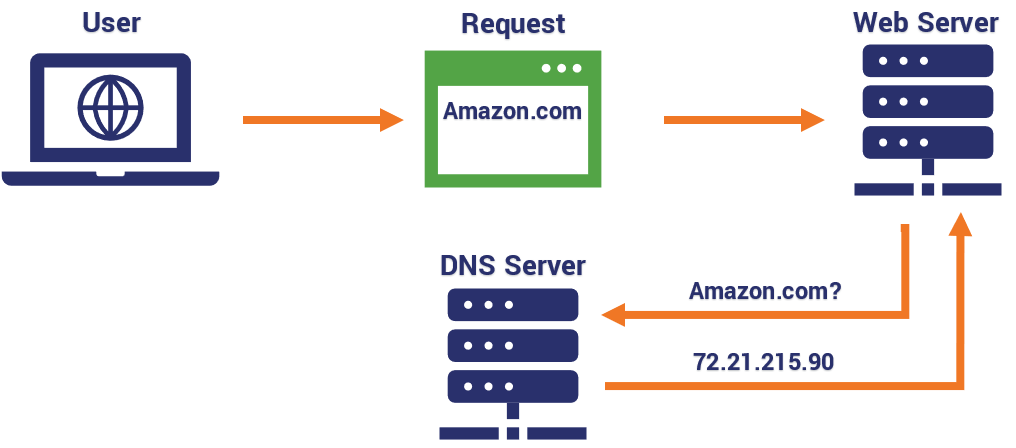
This diagram shows how the DNS works from end user to DNS. The example in the diagram is amazon.com.
Some examples of how we use DNS are:
- A user trying to access www.google.com
- A user trying to access www.youtube.com
- A user trying to access www.cdc.gov
We use DNS because it is a very user-friendly way to access different websites on the Internet. For instance, as referenced in the video “The Internet- IP Addresses and DNS Part 3”, a user does not need to know the IP address of a website in order to visit it. This is because DNS is used to translate what the user most likely knows, the domain name, into the actual IP address. This IP address is then fed to the computer, and the computer will connect with the IP address, pending other in-depth networking terminology like “syns” and “acks”. DNS is the reason why so many people find it easy to use the Internet, and without it, many people would struggle to find a use for the Internet. Therefore, without DNS, it is likely the Internet would not have become a popular as it has.